
Which Is Better, Quartz or Granite? A Practical Look for Everyday Homes
Choosing materials for a kitchen is rarely just about appearance. Most people stand in a showroom trying to imagine how a surface will behave under the rhythm of real life—busy mornings, late-night cooking, sunlight creeping in through the window, and all the tiny routines that make a house feel lived in. When it comes to countertops, quartz and granite often become the two main contenders. They look different, behave differently, and offer their own set of qualities. But instead of naming a winner, this blog simply lays things out so you can compare them based on what truly matters in your home.
Why Choosing the Right Material Matters
Countertops aren’t just decorative pieces. They’re work surfaces, landing zones for groceries, and places where appliances sit for years. Choosing the right material can influence:
- How easy your kitchen is to maintain
- How well the space matches your style
- How durable the room feels over time
- Whether the surface ages gracefully
The goal isn’t perfection; it’s finding something that fits your habits, your home’s lighting, and the overall mood you want to create.
Understanding Quartz
Quartz is an engineered product. Manufacturers take natural quartz fragments, mix them with resins, add pigments, and turn it all into slabs. Because the process is controlled, quartz surfaces have a clean, predictable appearance. Patterns stay steady, colours remain consistent, and there are no sudden mineral streaks that catch you off guard.
The appeal often lies in this neatness. If you prefer surfaces that feel calm, uniform, and polished, quartz tends to fall naturally into that category. It also comes in a wide range of shades—subtle whites, warm creams, deep greys, and marble-like designs that fit modern or minimalist kitchen cabinets. And since quartz slabs match their samples closely, many homeowners feel more confident choosing them.
Understanding Granite
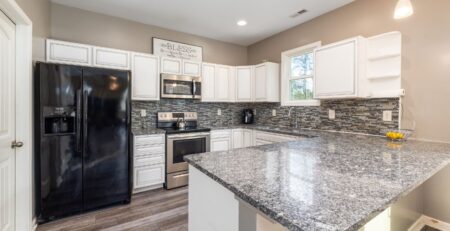
Granite works differently. It’s cut straight from the earth, slice by slice, block by block. No slab looks exactly like another. You’ll see speckles, mineral shadows, veins, and colour shifts that were formed naturally over countless years. Some people love this variety because it adds personality and depth. A granite surface often feels more like a story than a design.
Of course, the variation also means you must pick the exact slab you want since each one is unique. But for those who enjoy the grounding, earthy look of stone, granite has a charm that doesn’t rely on perfection. It stands out without trying.
Visual Feel: Calm vs. Character
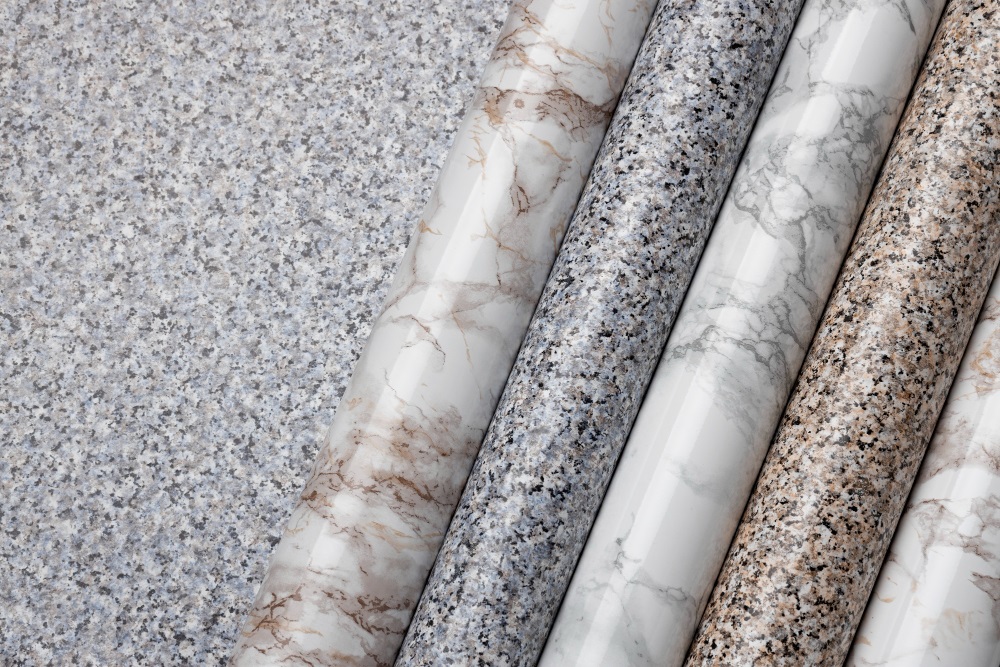
If you place the two materials side by side, the visual difference becomes instantly clear.
Quartz
- Consistent
- Smooth
- Controlled patterns
- Subtle movement
Granite
- Natural variation
- Rich mineral details
- Sometimes dramatic
- A “living stone” feel
Choosing between them often comes down to personality rather than technical comparisons. Some kitchens look best with the quiet presence of quartz, while others come alive with the organic textures of granite. Exploring the benefits of quartz countertops helps homeowners understand why this material works so well for busy kitchens that need both durability and a clean, consistent appearance.
Everyday Use and Maintenance
Both quartz and granite are strong, but they handle daily life in their own ways.
Quartz
- Non-porous
- No sealing required
- Easy to wipe clean
Granite
- Porous
- Needs occasional sealing
- Still very durable when maintained
For busy families or people who want low-maintenance surfaces, quartz by Georgia Cabinet Co Kitchen & Bath offers simplicity. Granite requires a bit more attention, but many homeowners don’t mind that trade-off because of its natural look.
Heat, Sunlight, and Practical Concerns
Heat tolerance is another thing people often think about. Granite, being natural stone, usually handles high temperatures better. Quartz, because of its resin content, can react to very hot pans, so trivets are recommended.
Sunlight also matters more than many people realize. Granite tends to stay colour-stable in bright areas. Quartz may show mild fading over long periods if placed in direct sun. This is not a flaw—just something to consider depending on where your counters will be installed.
Matching Your Home’s Style
Your kitchen’s style plays a big role too.
- Modern homes with clean lines often pair well with quartz.
- Homes with warm woods or natural themes tend to embrace a granite countertop more easily.
There’s no rulebook here. It’s like choosing clothing—you simply know when something suits you.
Long-Term Practicality
In the long run, both materials hold up well.
- Quartz stays consistent and easy to manage.
- Granite ages naturally, developing a sense of character.
Your decision may depend more on lifestyle than anything else. A busy kitchen with constant activity might lean toward quartz, while someone who values natural stone might find granite more fulfilling.
Conclusion: Let Your Space Guide You
There’s no clear winner between quartz and granite, and that’s what makes the choice personal. Quartz offers predictability and convenience. Granite offers uniqueness and the presence of nature. Once you compare how each material looks, behaves, and fits into your routine, the right decision usually becomes obvious. Let your space—and the way you live in it—decide.
MT: Quartz vs Granite Countertops: Which Material Is Better?
MD: Compare quartz and granite countertops to understand their durability, maintenance needs, and visual differences. Learn how to choose the right surface for your kitchen.