
What is cheaper, granite or quartz?
Choosing between granite and quartz usually begins with a budget question. Homeowners want something durable, attractive, and practical without overspending. At first glance, both materials seem similar in strength and popularity. But once pricing, maintenance, and long term value enter the discussion, the comparison becomes more detailed. The real difference is not always obvious from showroom samples alone. It takes a closer look to understand what truly costs more.
What Is Cheaper, Granite or Quartz?
When planning Cabinets and countertops, the countertop material often carries a significant share of the budget. Granite and quartz are two of the most common options in American kitchens, yet their pricing structures are slightly different.
Material Origin:
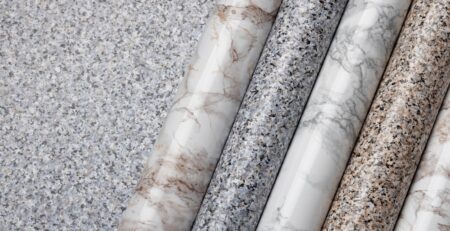
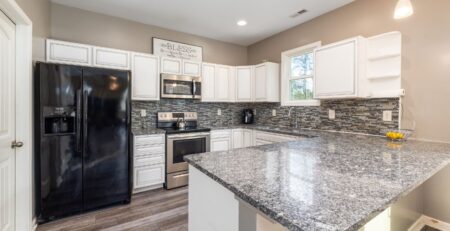
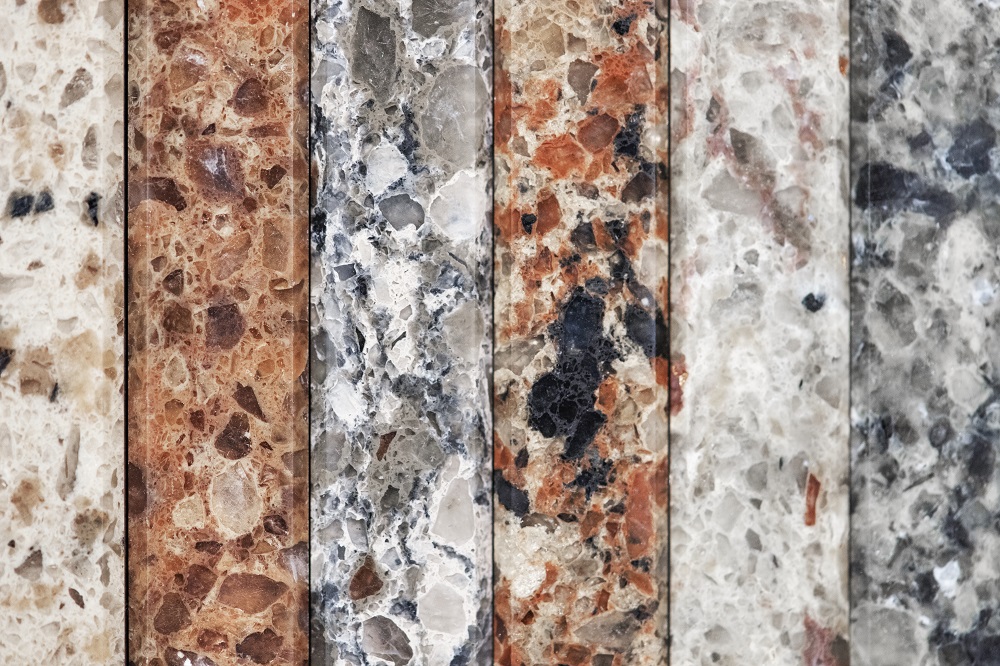
Granite: A natural stone quarried from the earth. Each slab is unique in color and veining. Availability affects pricing, especially for rare patterns.
Quartz: An engineered surface made from crushed quartz combined with resins. It offers consistent patterns and predictable appearance across slabs.
Because granite depends on quarry supply and transportation, pricing can fluctuate. Quartz pricing is influenced more by brand and manufacturing processes.
Upfront Cost:
In many regions, entry level granite starts slightly lower than entry level quartz. However, the difference is not dramatic.
- Basic granite colors: Often more affordable due to wide availability.
- Mid range granite: Similar in cost to mid range quartz.
- Premium granite: Can exceed the price of many quartz options.
- Designer quartz collections: May cost more because of brand value and modern finishes.
Installation charges are usually comparable. The total depends on kitchen size, number of cutouts, and chosen edge details rather than the stone type alone.
Installation Factors:
Several elements can quietly increase overall pricing:
- Edge profile upgrades: Decorative edges add labor cost.
- Backsplash height: Full height backsplashes require more material.
- Sink and cooktop cutouts: Each opening requires precision work.
- Slab thickness: Thicker slabs cost more and may increase labor.
These variables apply to both materials, which is why total estimates sometimes surprise homeowners.
Maintenance Over Time:
Granite: Requires sealing, typically once a year. Sealing protects against stains and moisture penetration. While not extremely expensive, it is an ongoing task.
Quartz: Does not require sealing. Its non porous surface resists staining more naturally and generally requires simple cleaning.
Over a five to ten year period, granite’s maintenance costs may add up. Quartz, although sometimes slightly higher in initial cost, can balance out because of reduced upkeep.
Durability and Heat Resistance:
- Granite: Naturally heat resistant. Hot cookware usually does not damage the surface.
- Quartz: Durable but sensitive to extreme heat because of resin content. Trivets are recommended.
Both materials resist scratches under normal kitchen use, though no surface is completely damage proof.
Lifestyle Considerations:
Homeowners evaluating Kitchen Cabinets Chattanooga, TN often realize countertop selection connects to daily habits.
- Busy households: Quartz may feel easier due to minimal maintenance.
- Traditional design preference: Granite’s natural variation may be more appealing.
- Modern kitchen style: Quartz offers cleaner, more uniform patterns.
Practical lifestyle choices sometimes matter more than small price differences.
Long Term Value:
When reviewing the Best Countertop Materials, resale value often enters the conversation.
- Both granite and quartz are desirable in today’s housing market.
- Buyers typically focus on overall kitchen appearance rather than the exact stone type.
- Professional installation influences value more than minor material price differences.
This means choosing the slightly cheaper option does not necessarily impact home value significantly.
Budget Scenario Example:
For a mid sized kitchen of about forty square feet:
- Entry granite project: Moderate starting material cost plus annual sealing expense.
- Mid range quartz project: Slightly higher material cost but minimal maintenance.
- Premium selections of either material: Comparable pricing depending on design complexity.
The final total depends on customization details rather than the base material alone.
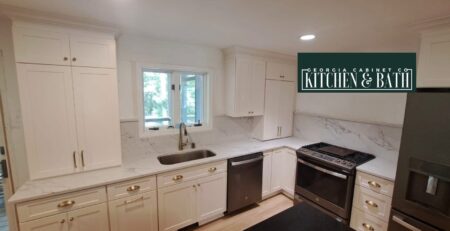
During research, homeowners sometimes come across Georgia Cabinet Co Kitchen & Bath while comparing options. Still, the more important step is understanding how each surface aligns with personal budget and lifestyle needs.
So Which Is Actually Cheaper?
Short answer: Entry level granite often costs less upfront.
Long answer: Mid range pricing overlaps, and premium levels vary widely. Over time, quartz may reduce maintenance costs, narrowing any initial price gap.
The difference is usually not dramatic enough to define the entire renovation budget. Cabinets, appliances, flooring, and labor all influence total expenses just as much.
Key Takeaways:
- <li”>Granite may offer a lower starting price in basic selections.
- Quartz provides lower maintenance requirements.
- Installation costs are similar in most cases.
- Long term financial differences are often smaller than expected.
- Personal preference plays a major role in final choice.
Conclusion:
When comparing granite and quartz, the idea of one being universally cheaper is somewhat misleading. Entry level granite may start lower, but ongoing maintenance should be considered. Quartz can cost slightly more at first, yet it simplifies upkeep over time. In most kitchens, the overall budget difference is modest. The better decision comes from balancing cost, durability, and design preference. Instead of focusing only on price per square foot, it helps to think about how the surface will perform in everyday life.